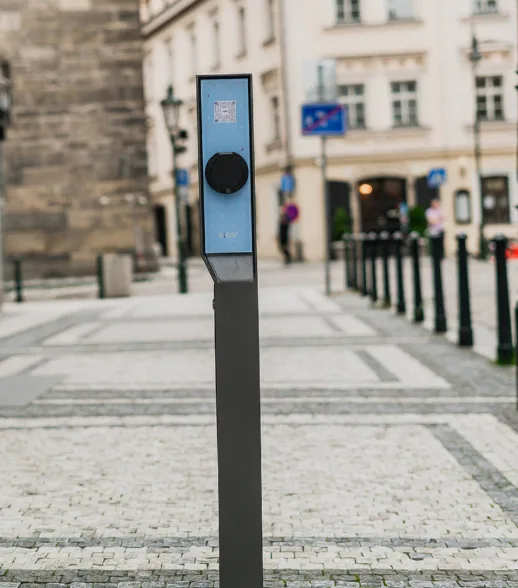
Charging stations for towns and municipalities
Most drivers charge at home. But residents of flats without a garage need public charging close to home. We supply stations for cars and e-bikes and can run them for you.
Charging where people live
EV owners mostly charge at home, often from their own solar panels. Residents of flats without a garage, however, depend on public stations. A lack of slow charging near home often puts them off buying an EV.
Slow AC charging is the most economical. Fast DC stations make sense mainly for transit traffic, while AC stations up to 22 kW are affordable, easy to install and connect, and charge a car overnight or during working hours.
Meaningful support for e-mobility in a town therefore means accessible, quality charging near where people live or work.
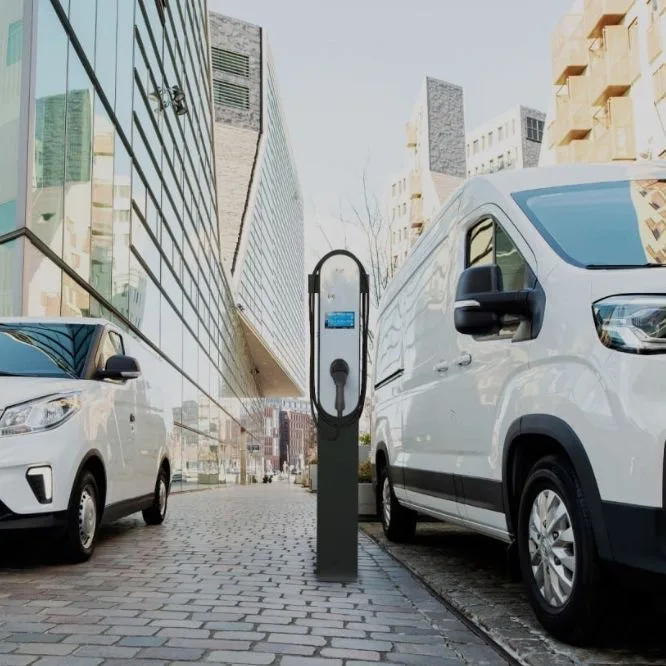
What the stations bring to your town
Charging near home
Residents without their own garage can charge close to home or work.
Less pollution and noise
More EVs in town means cleaner air and quieter streets.
The town need not be the operator
We can take over operation, payments and reporting to the ministry.
Built for public spaces
Metal and glass, not plastic. We make the stations in Czechia and keep spare parts in stock.
A look that fits your town
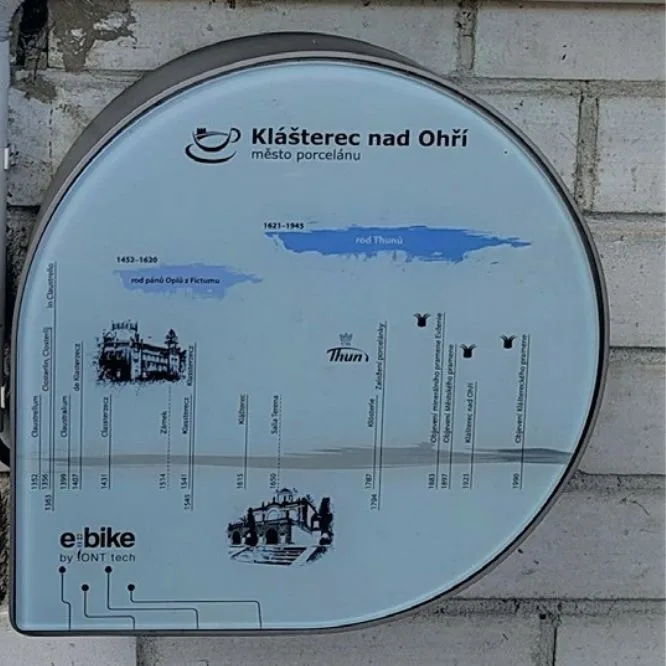
We make a front panel with your coat of arms, map or colours from a single unit.
Fast and slow charging
AC stations up to 22 kW for charging near home, DC stations from 40 kW for transit.
IONT tech stations for public spaces
Public charging is governed by the AFIR regulation. We add authorisation and a display to the stations so that they meet its requirements.
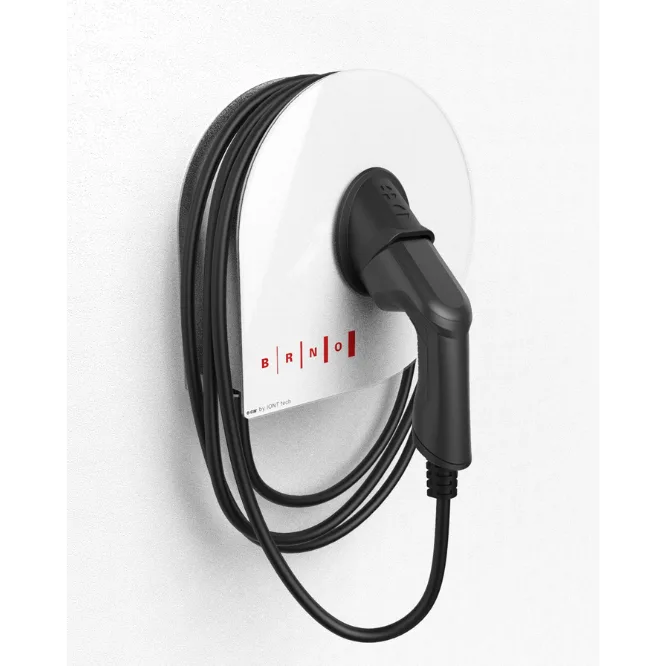
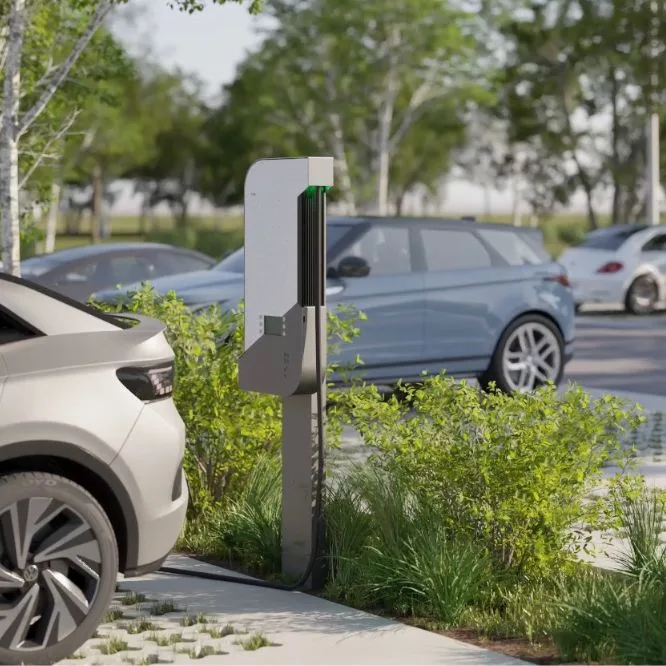
e:car WALL
Wall-mounted AC station for multi-storey car parks and spaces next to buildings.
Charging in apartment buildings and new builds
Mandatory cable ducting
New and renovated apartment buildings with more than 10 parking spaces must have cabling prepared for charging at the parking spaces. We explain how on the page charging in apartment buildings.
Operation for the town
The town does not have to be the operator of the charging station. We can take over operation, payments and reporting to the ministry. More about public station operation.
IONT stations in towns
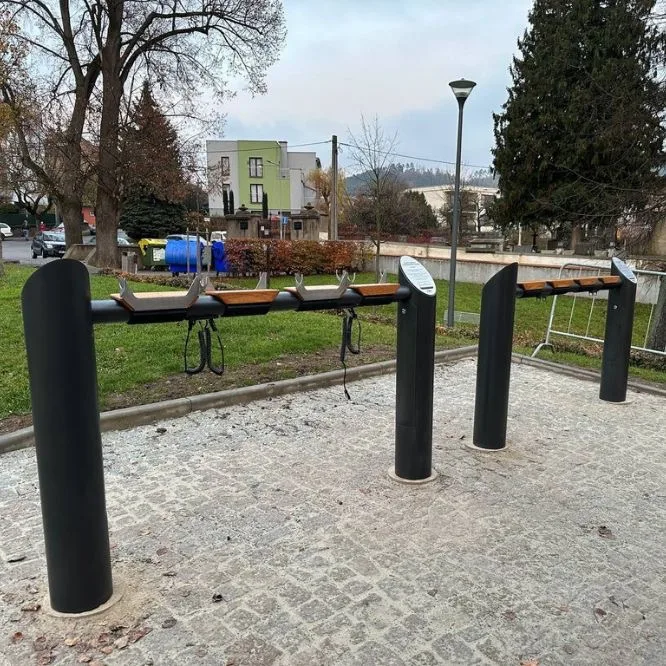
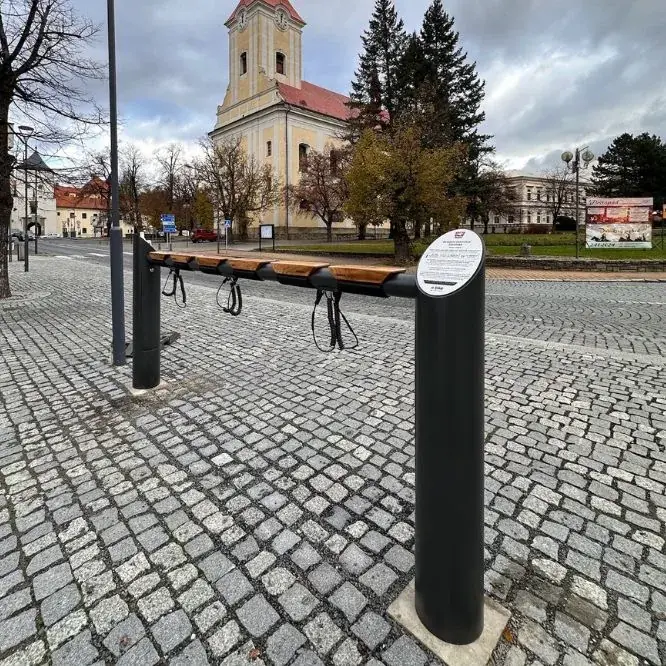
See more projects in our references. We manufacture our public-space stations in Czechia.
Frequently asked questions
Does the town have to operate the station itself?
No. We can take over operation, payments and reporting to the ministry for you.
Which stations suit public spaces?
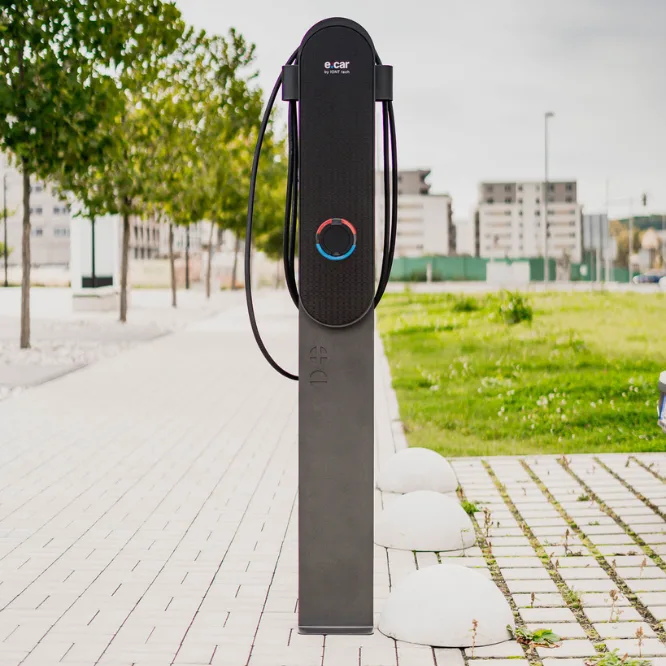
For charging near home, AC stations up to 22 kW (e:car COLUMN, e:car WALL); for fast charging on transit routes, the e:car DC WALL from 40 kW. For e-bikes, e:bike BAR.
Can the station match the look of the town?
Yes. We make a front panel with your coat of arms, map or colours from a single unit, as with the e-bike stations in Klášterec nad Ohří.
Do the stations comply with AFIR?
For public charging we add authorisation and a display so that the stations meet AFIR requirements. See the AFIR page for details.
Who installs the station?
IONT tech develops and manufactures the stations. Installation, commissioning and inspection are carried out by certified IONT installation partners across the Czech Republic. After your enquiry we will put you in touch with a suitable partner.
Want charging for your residents?
Get in touch. We will propose the locations and station types, prepare a quote and can take over operation for you.