BLOG o elektromobilitě
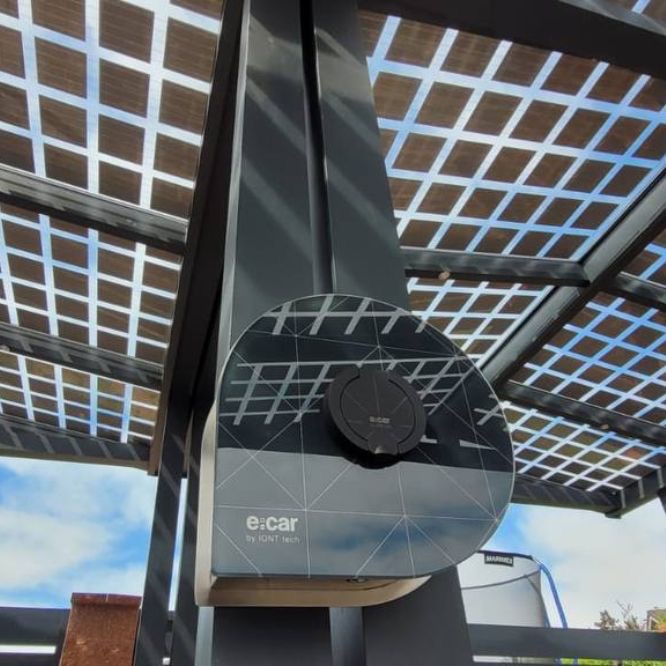
Wallbox kompatibilita s FVE
All charging stations and wallboxes from IONT tech are compatible with photovoltaic systems, particularly the SMART product range. The charging stations enable smart charging management and are fully compatible with photovoltaic power plants. This makes them the ideal choice for installation alongside a photovoltaic system, and they meet the conditions of the New Green Savings scheme.
Wallboxes in the SMART variant have their own meter at the main supply. It sees how much electricity is flowing to the grid right now and the station adapts its charging power to it. It never talks to the inverter, so it works with photovoltaics of any brand. If you run your own home automation, the station can also be controlled over Modbus TCP from Home Assistant, Loxone or a building energy management system.
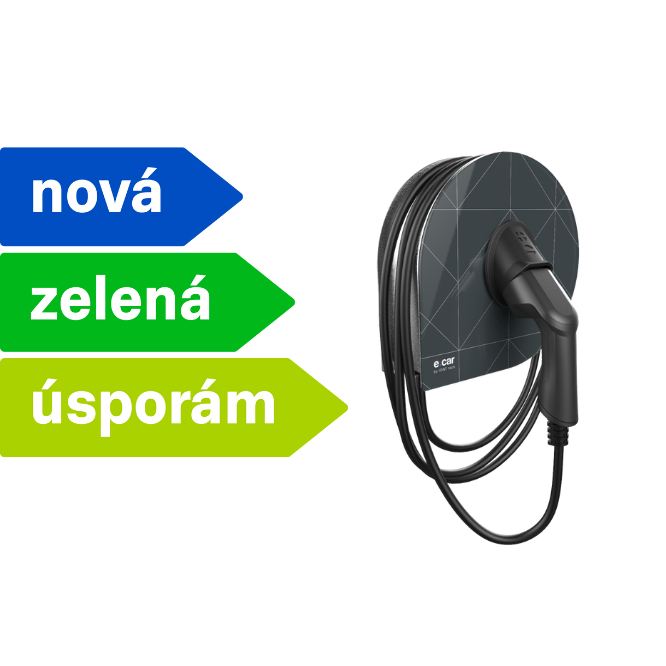
New Green Savings 2026+ for homeowners' associations and housing cooperatives: an interest-free loan for charging stations
Take advantage of New Green Savings financing (an interest-free loan) for installing electric vehicle charging stations in apartment buildings. Support eco-friendly transport and enhance the comfort of your building's residents.
Co dotace zahrnuje?
- The installation of charging stations for passenger electric vehicles
- Additional equipment essential for the operation of charging points
- Available even for listed heritage buildings
EPBD - Directive 2024/1275 of the European Parliament and of the Council of 24 April 2024 on the energy performance of buildings
In order to promote the use of energy from renewable sources on site and, in addition to a common general framework, Member States should take the necessary measures to ensure that the benefits of maximising the on-site use of energy from renewable sources are recognised and taken into account in the calculation method, including for other uses such as recharging points for electric vehicles.
Electric vehicles are expected to play a key role in the decarbonisation and efficiency of the electricity system, through flexibility, balancing and storage services, in particular through aggregation. This potential of electric vehicles to integrate into the electricity system and contribute to system efficiency and the further absorption of electricity from renewable sources should be fully exploited. Recharging is particularly important in the context of buildings, as this is where electric vehicles park regularly and for long periods. Slow charging is economical, and the installation of recharging points in private spaces can provide energy storage for the associated building and the integration of smart charging and bidirectional charging services.

Aktualizace wallboxu Over the Air
Always up to date and more powerful
Charging stations from IONT tech in the SMART variant use Over-the-Air (OTA) updates, ensuring that your wallbox is always in perfect condition.
Thanks to an internet connection, whether via Wi-Fi or a LAN cable, you gain access to new features, improved controls and optimised performance.
OTA updates deliver more than just bug fixes - they take on board user feedback and reflect the latest technology trends.
Every user thereby contributes to the further development and refinement of our charging stations. Your device thus continually keeps pace with the future of electromobility.
Start with the client - find out what they want and give it to them.
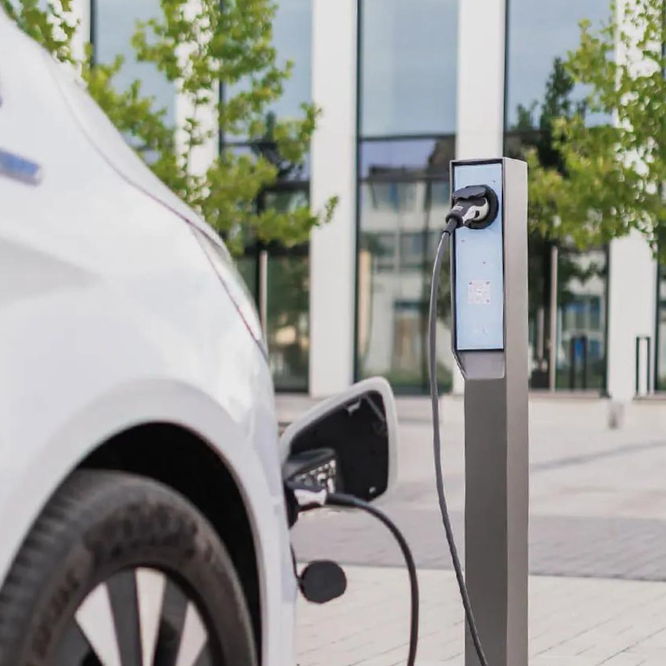
Support for the construction of standard charging stations in towns and municipalities
Electric vehicles in the Czech Republic have access to around 5,500 public charging points, more than 70% of which are standard AC charging points with an output of up to 22 kW, with the majority located in Prague or in Brno.
The rest of the country is lagging behind.
The Czech Ministry of Transport therefore, on 31 October 2024, announced a call to support the construction of standard charging stations in towns and municipalities, for which funds of CZK 370,000,000 have been allocated (an EU contribution from the Cohesion Fund).
Applicants can receive support at an intensity of up to 80% of the project's eligible expenditure. The call is round-based and will be open to applicants until 28 February 2025.
IONT.tech can help towns and municipalities make use of the call. Our stations are adaptable and upgradeable, which means they can adapt to new legislative requirements, such as the AFIR.
Would you like to make use of the call to support the construction of standard charging stations in towns and municipalities, or find out more about charging options? Get informed in good time about the options available in the field of charging infrastructure.
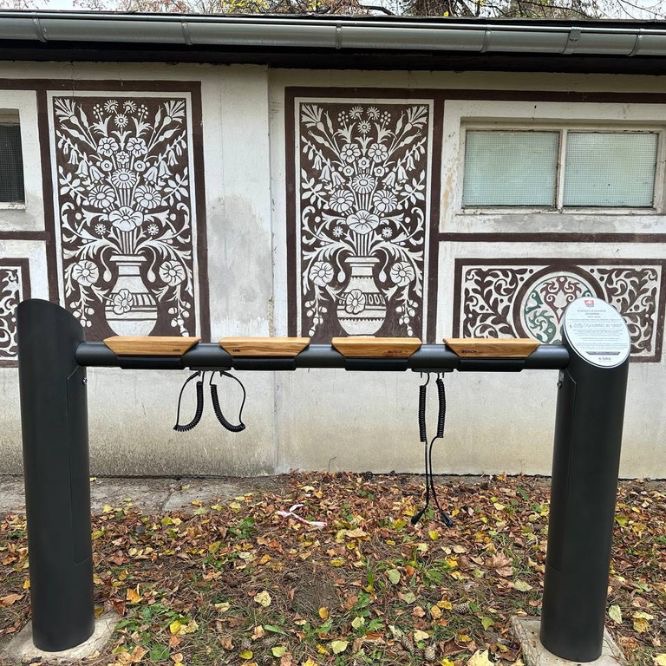
Grant programmes to support cycling and cycle transport in 2025
In addition to the South Moravian Region, which has announced Grant Scheme 2 to support cycle transport and cycle tourism, similar programmes are offered by other regions as well, such as the Hradec Králové Region (Purpose 2) or the Moravian-Silesian Region (scheme no. 3). These grant programmes aim to improve the supporting infrastructure and facilities for bicycles and e-bikes. They support the enhancement of cycling infrastructure in these regions as part of cycle paths, cycle routes and MTB trails, with an emphasis on the development of cycle transport and cycle tourism.
Eligible costs:
- The installation of e-bike charging stations including selected supporting accessories, such as service tools and power supply via a solar panel.
- The construction of supporting cycling infrastructure, such as rest areas and shelters on new and existing cycle routes, within roughly 15 m of the route of the cycle path or cycle route.

Installation of a charging station for bicycles
Building charging stations for e-bikes is a key step in supporting clean mobility and increasing visitor numbers to towns and municipalities.
E-bikes are becoming an increasingly popular choice, both among local residents and tourists.
The availability of charging infrastructure encourages cyclists to use e-bikes more frequently, which contributes to lower emissions and less traffic congestion.
Charging stations such as the e:bike BAR or e:bike WALL from the Czech company IONT tech also provide a practical and aesthetic solution. Investing in charging infrastructure will not only support a healthy lifestyle but also increase the appeal of the area for visitors seeking eco-friendly and sustainable solutions.
How does the installation of such a charging station work if you decide to purchase one?
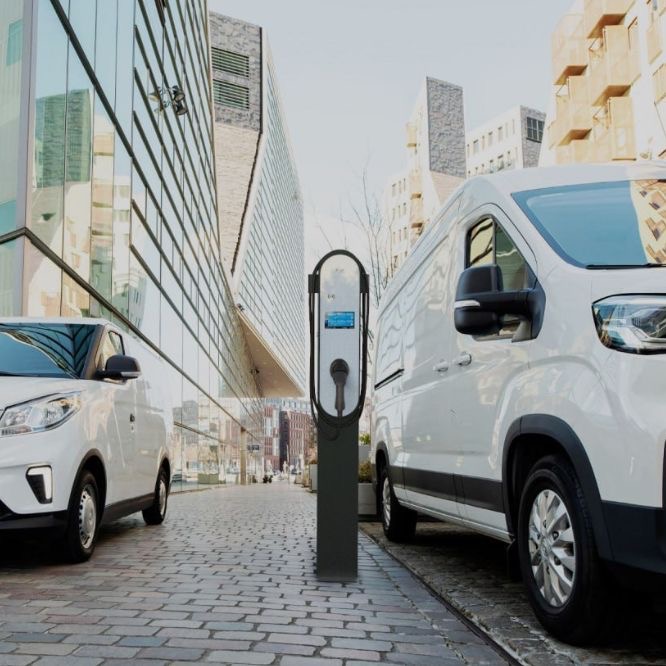
PCo říká AFIR?
All the information about AFIR, concise and clear.
Who does AFIR (the Alternative Fuels Infrastructure Regulation) apply to?
The public availability of charging points for electric vehicles is a fundamental requirement for the roll-out of electromobility. In this context, the Alternative Fuels Infrastructure Regulation (AFIR) is particularly important.
From 13 April 2024, ad-hoc charging at charging points will be mandatory, meaning the ability to charge and pay without a prior electricity contract. To understand which charging points AFIR applies to, it is necessary to clearly distinguish between publicly accessible and non-publicly accessible charging points.
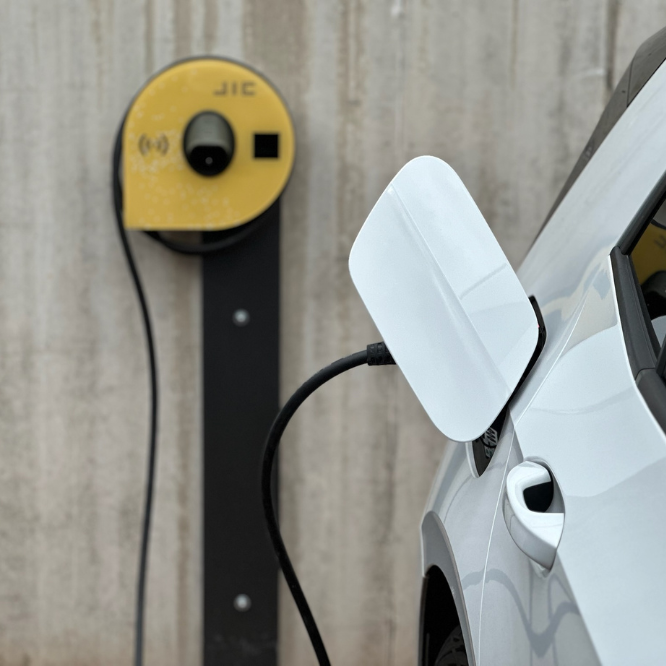
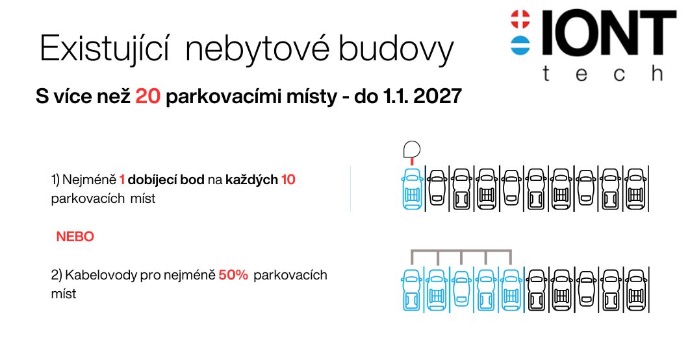
The owner of the building or facility is obliged to ensure the installation of at least one charging station by 1 January 2025
Did you know that the owner of a building or facility is obliged, no later than 1 January 2025 to ensure the installation of at least one charging station if they own a building other than a residential building with more than 20 parking spaces?
This is a provision of Section 167(e) of the new Building Act (No. 283/2021 Coll.). Failure to comply with this obligation is an offence for which a fine of up to CZK 400,000 may be imposed. This applies to all buildings such as company headquarters, production halls, cinemas, entertainment and shopping centres, zoos and the like.
The obligation to install charging stations under Section 167(e) of the new Building Act No. 283/2021 Coll. effective from 1 January 2025 is the result of the transposition of Directive 2010/31/EU of the European Parliament and of the Council on the energy performance of buildings, as amended by Directive (EU) 2018/844. The main aims of this measure are to support electromobility and increase the energy efficiency of buildings, in line with European policies aimed at reducing greenhouse gas emissions and transitioning to sustainable energy sources.
Operating a public charging station
Are you planning to build and operate a public charging station?
How does the permitting process work?
From a legislative point of view, electric vehicles are defined by Directive 2014/94/EU and Act No. 311/2006 Coll. on fuels and fuel filling stations. Further regulation of these vehicles is set out in Act No. 56/2001 Coll. on the conditions for the operation of vehicles on public roads.
For the purposes of the updated National Action Plan for Clean Mobility, the term 'electric vehicle' will include vehicles in the battery electric vehicle (BEV) and plug-in hybrid electric vehicle (PHEV) categories that meet the current definition of a low-emission vehicle under EU legislation. A 'low-emission' or 'clean' passenger vehicle is understood to be a vehicle with CO2 emissions of up to 50 g/km.
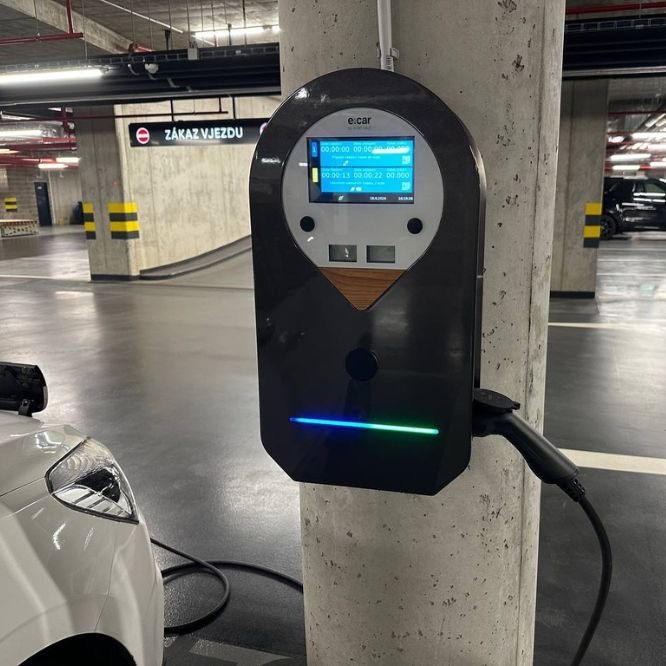
Clean transport
Why do we decide to buy an electric car? Each of us has slightly different reasons.
However, now, at a time when the purchase price of an electric vehicle is higher than that of a car with a combustion engine, the desire to do something for the environment, for our children and their children who will be here after us, will very likely be the main motive.
The desire to behave responsibly and sustainably, the very same one that motivates us to sort our waste and try to minimise how much of it we produce.
There is a lot of talk about sustainability, but is so much really being done for it?

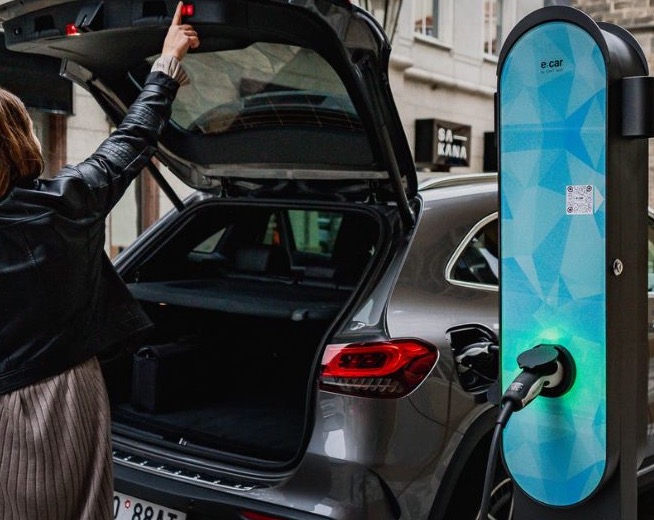
The electric vehicle charger
An electric vehicle charger is not merely a socket, but a sophisticated electrical device. Compared with an ordinary socket, however, it is far safer. High voltage is used to charge an electric vehicle, so it is important to pay attention to the safety of the whole process. How can you ensure efficient and convenient charging of the vehicle's battery? What should you consider and bear in mind when choosing a charger?
When you buy a new electric car you usually get a Type 2 connecting cable and an emergency charger for a standard 230 V socket. Such a charger should really only be used in an emergency, to reach a proper charging station where you can recharge quickly and safely.
It is not so much the charger itself that is dangerous, but rather the socket you plug it into, or their connection. The wiring in a house may not be optimally rated....
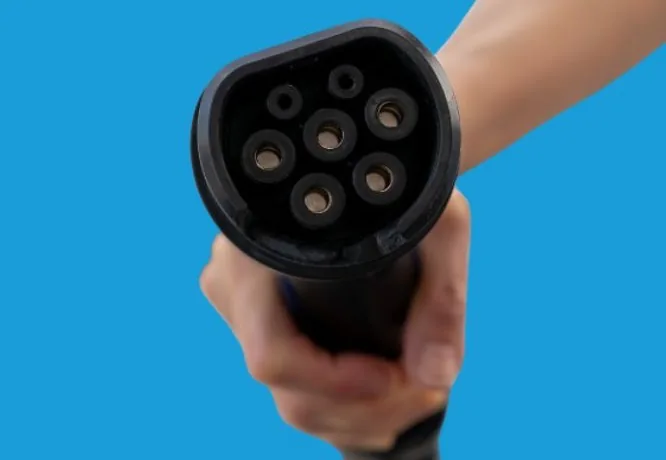
How and where can I charge my electric vehicle?
An overview of the basic EV charging options for beginners. A description of charging at home, at work and at public charging stations.
Charging electric vehicles is an integral part of operating these vehicles. Unfamiliarity with the process of charging electric vehicles is among the reasons why many potential users hesitate to decide on buying an electric vehicle.
Charging is also one of the factors that affects the comfort and practicality of using them. The ways and options for charging electric vehicles are constantly evolving to keep up with the growing demand for electromobility while ensuring efficient and easy use.
Grant to support electromobility "Electromobility Guarantee"
Grants for companies to purchase electric vehicles for their fleet are finally available in the Czech Republic.
The Ministry of Industry and Trade is introducing a new programme called 'Electromobility Guarantee - Call I', financed from the National Recovery Plan and European funds, precisely because sales of electric vehicles in the Czech Republic are developing more slowly than in other European countries.
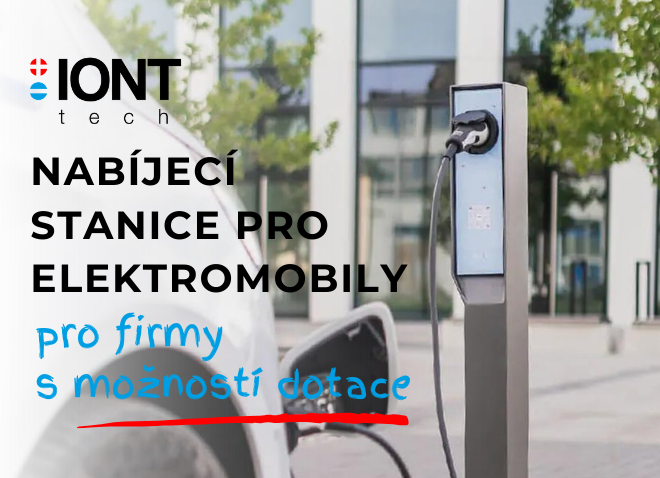
Subvention for a charging station
The grant for a charging station at a family house is now CZK 10,000 as part of the photovoltaics grant (Oprav dům po babičce), and it is still an attractive offer for everyone starting out with electromobility.
Our charging stations are smart and offer smart charging management including Load Balancing, so a grant can be claimed for them. They are able to communicate with the control systems of other manufacturers, allowing easy integration into an existing system, including photovoltaic installations.