EPBD - Directive (EU) 2024/1275 of the European Parliament and of the Council of 24 April 2024 on the energy performance of buildings
In order to promote the on-site use of energy from renewable sources and in addition to the common general framework, Member States should adopt the necessary measures to ensure that the benefits of maximising the on-site use of energy from renewable sources are recognised and taken into account in the calculation methodology, including for other uses such as recharging points for electric vehicles.
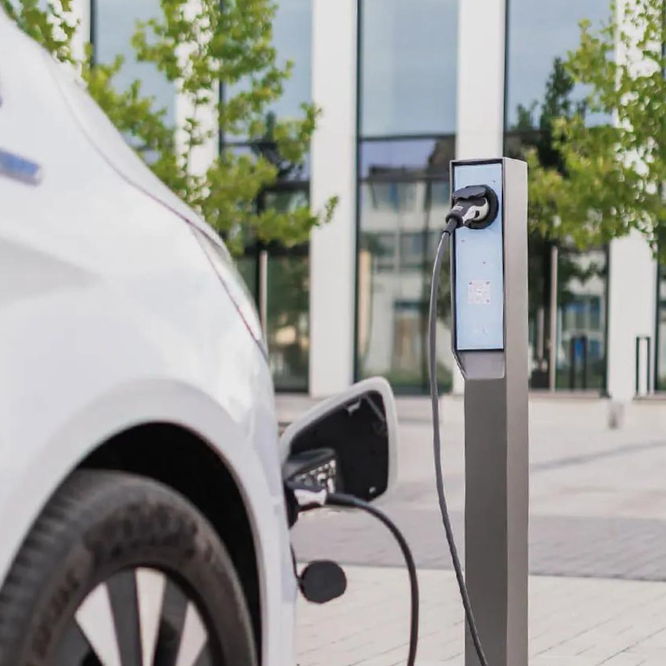
Electric vehicles are expected to play a key role in the decarbonisation and efficiency of the electricity system through flexibility, balancing and storage services, in particular through aggregation. This potential of electric vehicles to integrate into the electricity system and contribute to its efficiency and to the further uptake of renewable electricity should be fully harnessed. Recharging is particularly important in the context of buildings, as this is where electric vehicles are parked regularly and for long periods. Slow recharging is economical, and the installation of recharging points on private premises can provide energy storage for the associated building and the integration of smart and bidirectional charging services.
Main objectives
- Promoting renewable energy sources:
- Integrating energy from renewable sources into buildings and using it to recharge electric vehicles (EVs).
- Increasing the flexibility and efficiency of the electricity system through electric vehicles.
- Ensuring recharging infrastructure:
- Buildings are to play a key role in developing EV recharging infrastructure, including the integration of smart and bidirectional charging.
- Supporting cycling and active mobility:
- An obligation to provide parking spaces for bicycles, including electrically powered models.
Infrastructure requirements for different building types
1. Non-residential buildings (offices, commercial premises, etc.):
- New or renovated buildings with more than 5 parking spaces:
- At least 1 recharging point for every 5 parking spaces.
- Cabling for 50% of parking spaces and ducting for the rest, allowing recharging points to be installed in the future.
- Bicycle parking spaces:
- 15% of average user capacity or 10% of the building's total capacity.
- Specifically for office buildings:
- At least 1 recharging point for every 2 parking spaces.
- All non-residential buildings with more than 20 parking spaces (by 2027):
- 1 recharging point for every 10 parking spaces or cabling for at least 50% of parking spaces.


2. Residential buildings:
- New or renovated residential buildings with more than 3 parking spaces:
- Cabling for 50% of parking spaces and ducting for the rest.
- Bicycle parking spaces:
- 2 parking spaces for every dwelling unit.
- New residential buildings with more than 3 parking spaces:
- At least 1 recharging point.
Important technical details
- The cabling must be sized to allow the simultaneous use of all recharging points.
- Accessibility of recharging points for people with disabilities is mandatory where technically feasible.
- Smart charging and bidirectional charging enable buildings to be integrated into the energy system and renewable sources to be used efficiently.