
Charging stations for e-bikes
Building charging stations for e-bikes is a crucial step towards supporting clean mobility and boosting footfall in towns and cities.
E-bikes are becoming an ever more popular choice, both among local residents and tourists.
The availability of charging infrastructure encourages cyclists to use e-bikes more often, which contributes to lower emissions and reduced traffic congestion.
What is more, charging stations such as the e:bike BAR or e:bike WALL from the Czech company IONT tech provide a practical and attractive solution. Investing in charging infrastructure not only promotes a healthy lifestyle but also makes the area more appealing to visitors looking for eco-friendly and sustainable options.
How does the installation of such a charging station take place, should you decide to acquire one?
The foundation is the foundation of success
The e:bike BAR charging station can be installed in two ways, depending on the requirements of the location and the type of terrain:
- Installation on concrete footings: This method is suitable for a stable and solid base, for example on an already prepared surface such as pavements or paved areas. Concrete footings provide a robust and durable base for the charging station, which is firmly anchored and withstands the effects of the weather. The process involves digging holes, pouring concrete and then fixing the station in place. This installation is ideal as a long-term solution in locations where high stability is required.
- Installation on ground screws: This procedure is suitable for locations with natural terrain, such as parks, grassy areas or other areas without a solid base. Ground screws allow for quick and flexible installation without the need for concrete, while still ensuring sufficient stability. The station is secured using screws that are driven directly into the ground, which makes it easier to dismantle or relocate should the station need to be moved. This method is also more environmentally friendly.
Both installation options ensure the stability and functionality of the charging station, with the choice depending on the specific conditions of the location.
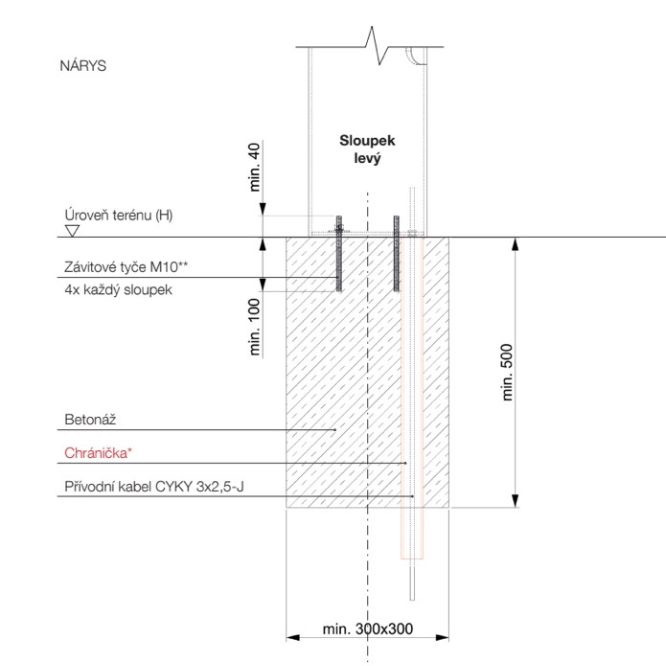
Installing the charging station on concrete footings
To install the eBAR charging station on paved areas such as squares, car parks or other busy public spaces, we offer a solution using concrete footings with a minimum depth of 50 cm.
This method of installation is incomparably faster than traditional methods, but it does require coordination and preparation on the part of the investor.
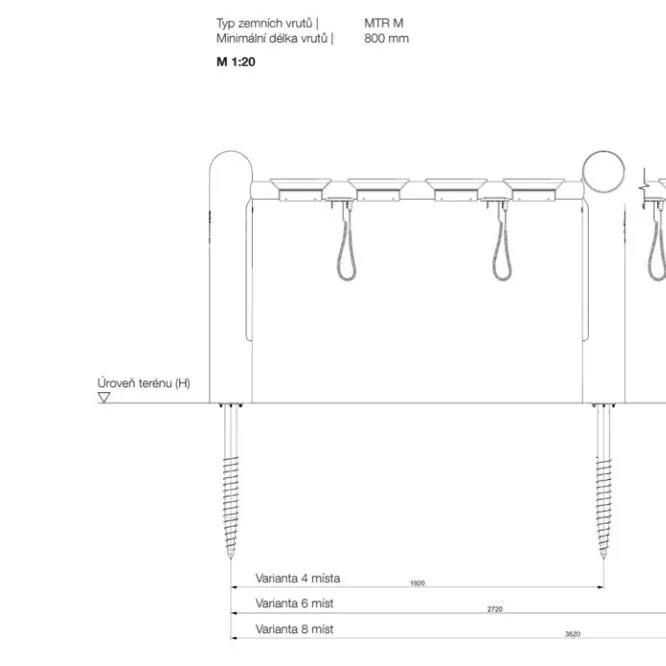
Installing the charging station on ground screws
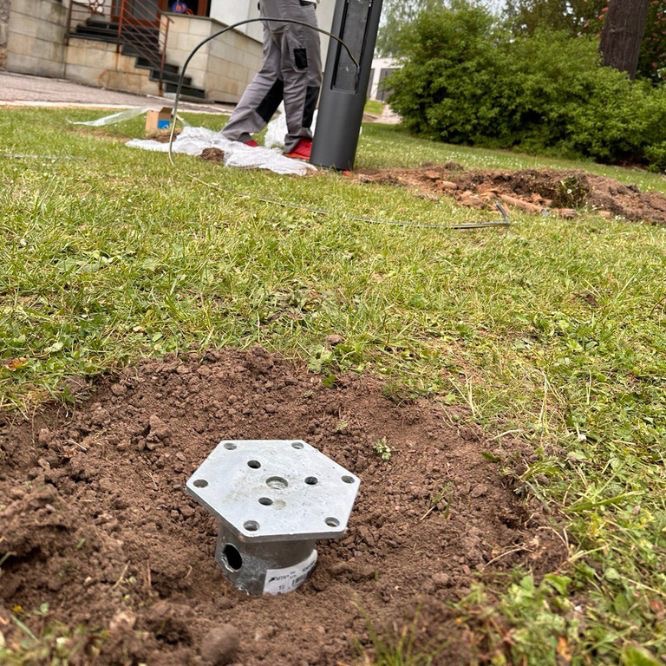
is a quick and flexible solution that requires no concrete foundations and minimises disruption to the terrain. Before the installation itself, it is necessary to check whether the base is sufficiently stable and suitable for driving in the ground screws. The terrain should be level and free of larger obstacles such as stones or tree roots.
Measuring and marking: Based on the assembly plan, mark the exact position of the screws according to the installation holes of the e:bike BAR charging station.
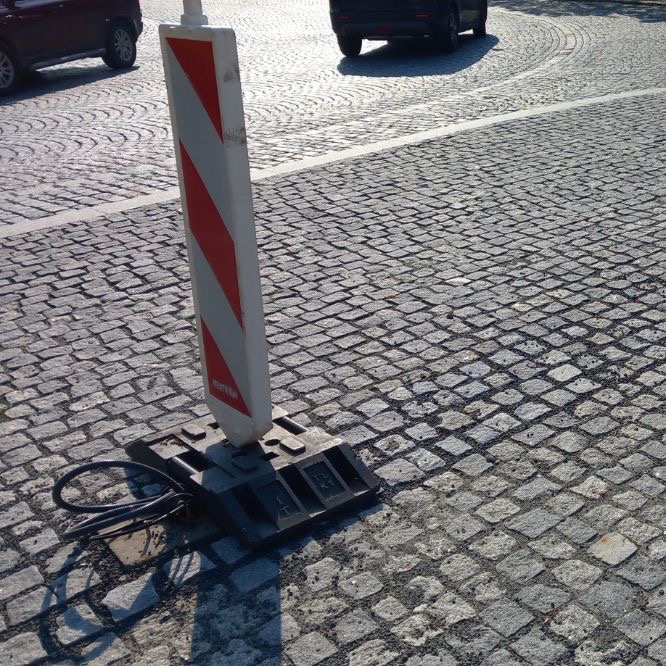
Mounting the charging station on concrete footings
Preparing the concrete footings
First, the concrete footings must be prepared to an appropriate depth of at least 50 cm. Once they have been installed, the base is ready for mounting the station.
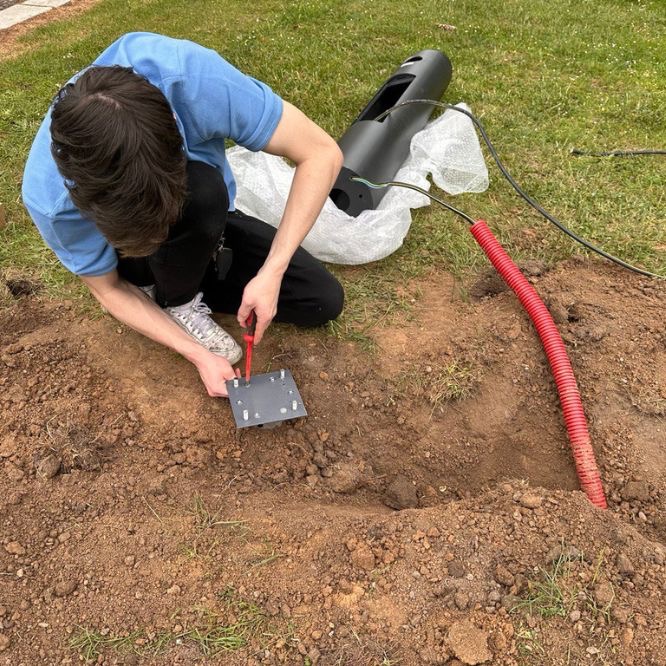
The e:bike BAR station is attached to the concrete footings using threaded rods. The threaded rods allow for quick and safe mounting of the station without the need for complicated foundation work.
This process is time-efficient and fast, ensuring that the station can be brought into operation within a short time frame.
Given that installation on concrete footings requires preparation on the part of the investor, we recommend coordinating in good time so that everything runs smoothly and on schedule.
Mounting the charging station on ground screws
Choosing the right screws
Select the appropriate ground screws. Once this is done, place the e:bike BAR charging station on the screws so that the mounting holes on the station line up with the position of the screws.
Bolting down the station
Use the mounting bolts to fix the station to the screws. It is important that all bolts are properly tightened so that the station is firmly fixed and stable.
Mounting on ground screws is efficient and quick. This method is advantageous for locations where rapid installation or the possibility of easily relocating the station in the future is required.
Assembling the charging station
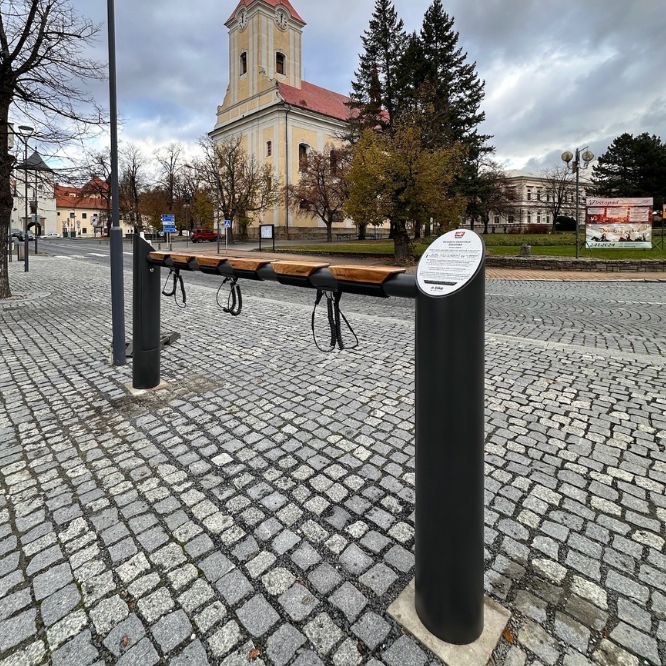
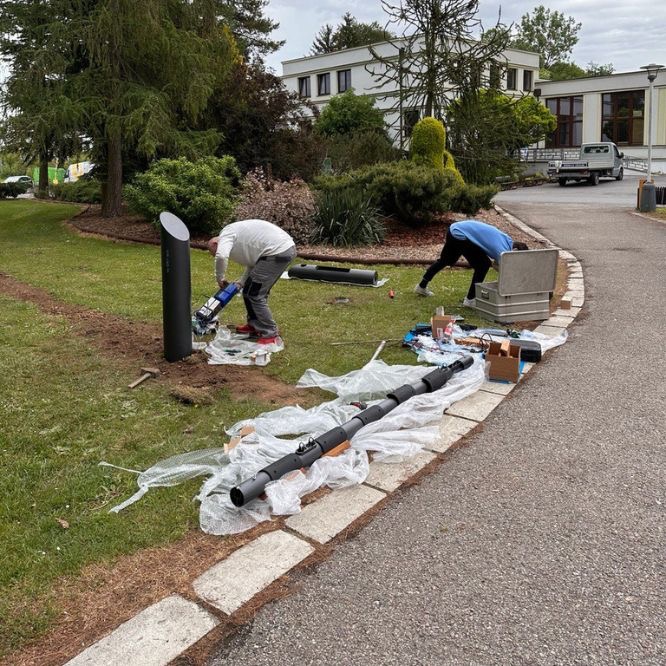
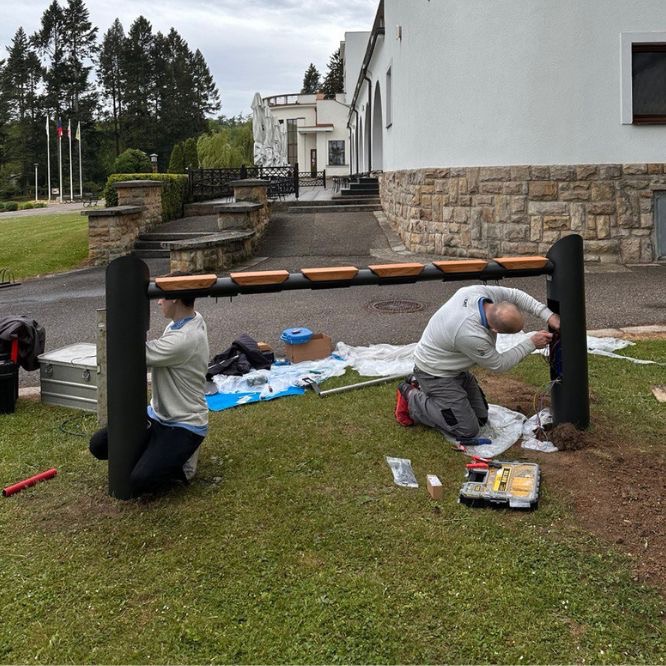
for e-bikes, which consists of two posts and a connecting bar with points for hanging bikes by their saddles, is relatively straightforward, but it does require careful preparation and procedure.
Fix both posts in place, either on concrete footings or on ground screws depending on the chosen method of assembly. Make sure the posts stand straight and firm.
Attach the connecting bar between the two posts using the supplied bolts and fixing material. This bar serves not only as structural support but also as a place for hanging bikes by their saddles.
Run the cabling from the 230V electrical connection to the station. The cabling should be routed safely to avoid any risk of damage.
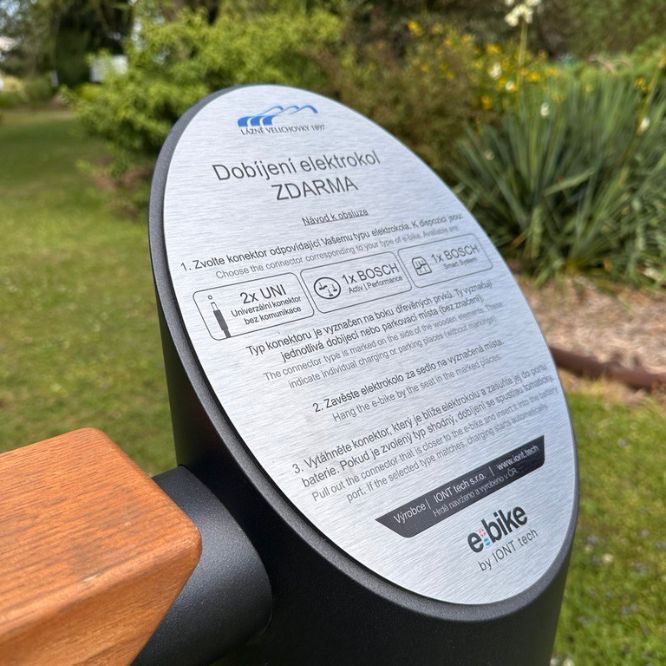
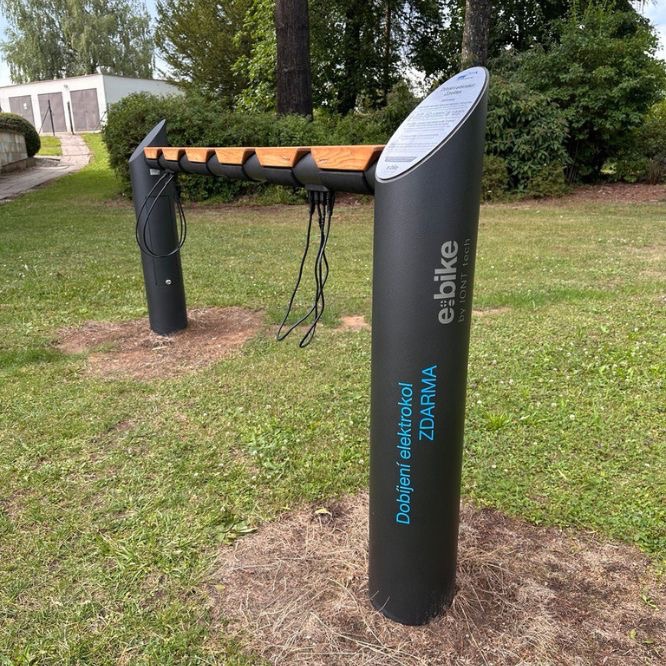
Instructions
The station should clearly state who it is intended for. In the case of public stations, this usually means that it is accessible to local residents as well as tourists who use e-bikes. It is also important that visitors can easily find information about the cost of using the station, should there be a charge.
However, given that the operating costs of a charging station are negligible, we recommend leaving its use free of charge. Free charging can increase the appeal of the location for cyclists, giving them another reason to visit the town or village. Moreover, this approach can bring economic benefits in other ways.
This approach will support not only clean mobility but also the local economy and the development of tourism.