Operating a charging stationobligations, legislation and AFIR
Planning to open a charging station to the public? Here is what an operator has to do under the Czech Fuels Act and the AFIR regulation – and how you can leave it all to us.
Public or non-public station
A charging station is defined by Act No. 311/2006 Coll. on fuels. The operator’s obligations depend on whether the station is open to the public. Both kinds can be at one site, but the difference must be clear to drivers.
Publicly accessible
Unrestricted public access with the option to charge and pay. The operator must ensure non-discriminatory access for all EU users and allow ad hoc charging.
Non-public
A station for a specific group of users: at home, in an apartment building garage for residents, at a car dealer or service centre, for a company’s employees and fleet.
What the operator of a public station must do
Ad hoc charging
Allow charging and payment without a contract or registration, as required by AFIR.
Prices and payment terms
Publish the prices charged, payment terms and payment methods.
Compatibility information
Make information available on which vehicles the station is compatible with.
Station signage
Mark the station with the approved pictograms.
Registration with the Ministry
Register the station in the charging station register of the Ministry of Industry and Trade before putting it into operation.
Energy reports
Regularly report the energy supplied to the Ministry.
Ministry forms (in Czech): charging station register · single station (Word) · multiple stations (Excel)
Who the obligations do not apply to
Stations of non-business individuals used for free charging, and stations of housing cooperatives and owners’ associations for their members. The Fuels Act does, however, apply to legal entities even if they do not use the station for business. A charging station operator is not an electricity distributor – no electricity trading licence or customs registration is needed.
Permits and siting
Wall-mounted wallbox
A station up to 22 kW connected to the building’s wiring usually does not need a building permit. Installation and the initial inspection are carried out by an electrician.
More powerful and free-standing stations
For more powerful stations, posts with their own foundation or a new grid connection, the building authority decides whether it is a structure and which permit is needed.
Grid connection
If the station needs a higher reserved capacity, an application is made to the distribution system operator. Dynamic load management often avoids the upgrade.
Inspections
Electrical inspections protect owners, operators and users. The initial inspection is done before commissioning, periodic inspections at intervals set by the inspection technician. Neglected inspections can mean a fine from the labour inspectorate and problems with insurance.
Wallbox installation and inspection: what the law requires →
Payment under AFIR
Regulation (EU) 2023/1804 has applied since 13 April 2024 and sets out how drivers pay at new public stations.
| Station power | Permitted payment methods |
|---|---|
| below 50 kW | a payment card reader, a contactless device able to read payment cards, or an internet-connected device (dynamic QR code) |
| 50 kW and above | a payment card reader, or a contactless device able to read payment cards |
All about the AFIR regulation →
Related legislation
- Act No. 311/2006 Coll. on fuels (amended by Act No. 152/2017 Coll.)
- Regulation (EU) 2023/1804 (AFIR), which replaced Directive 2014/94/EU
- Energy Act No. 458/2000 Coll.
- Building Act No. 283/2021 Coll.
- Standards EN 61851-1, EN 61851-23, EN 62196-2 and -3
Don’t want to deal with it? We operate the station for you
A public station operator has many obligations, and they don’t end at commissioning. IONT tech manufactures stations and operates them. You own the station and the site; we open it to the public and take care of payments, pricing, monitoring and reporting.
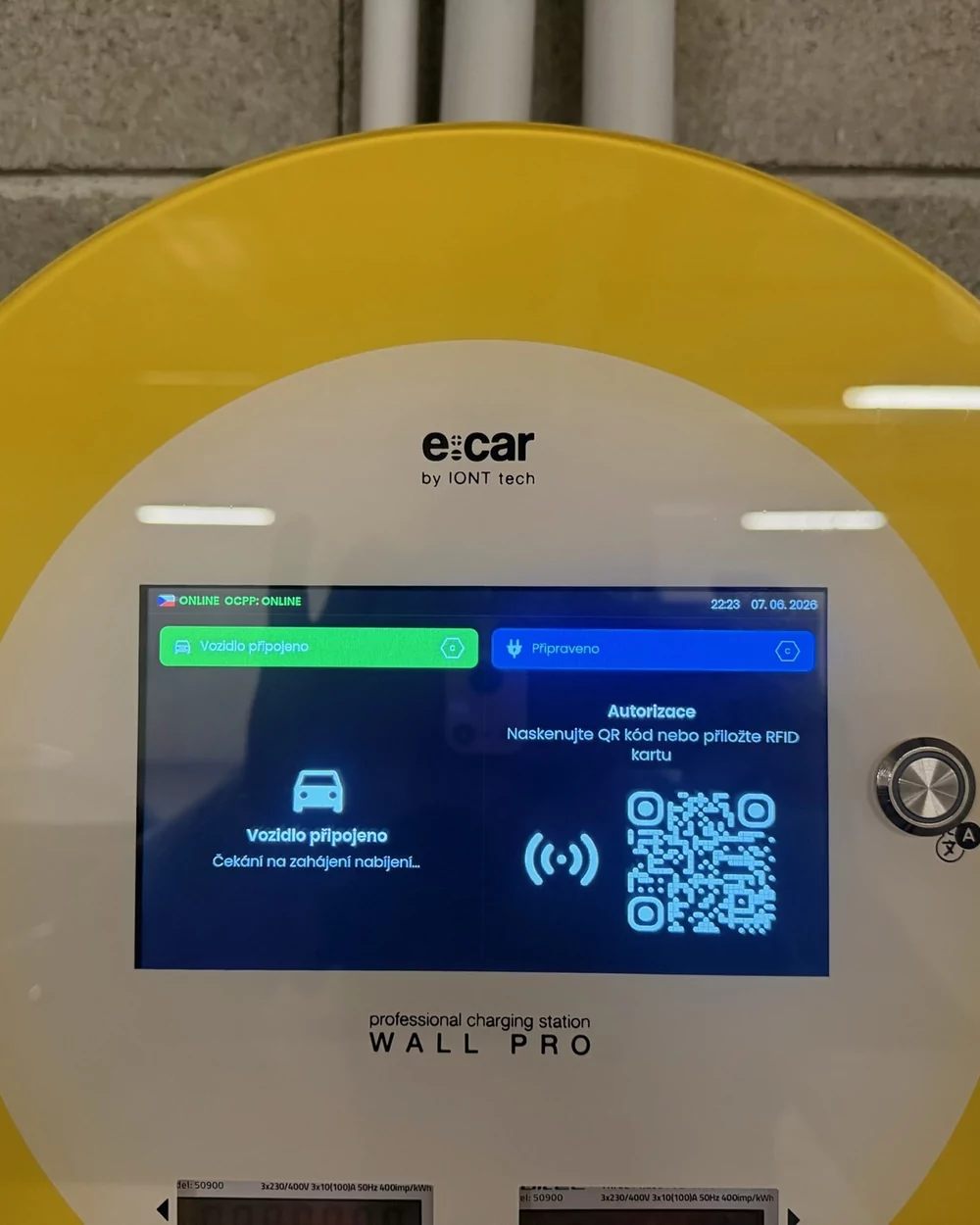
- Card payment via a QR code on the display – no registration and no app, as required by AFIR
- Registration with the Ministry and energy reports
- Published prices, payment terms and station signage
- Station information in the nabij.to app under Station management
- We send you the revenue every month
- We also connect fully compatible stations from other manufacturers
excl. VAT per station per month + 8% of the charging price, no setup fee.
Pricing and service details →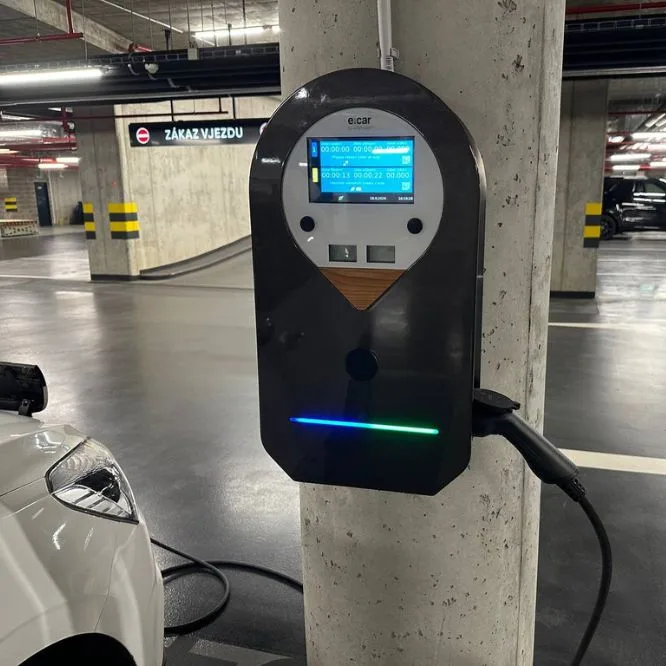
Frequently asked questions
Do I need a trade licence or energy licence to operate a public charging station?
A charging station operator is not an electricity distributor. No electricity trading licence or customs registration is needed. The operator must, however, meet the obligations of the Fuels Act, such as registering the station with the Ministry of Industry and Trade.
Do I have to register the station with the Ministry of Industry and Trade?
Yes, if it is publicly accessible. The registration is submitted before the station is put into operation – using a Word form for one station or an Excel form for several. The operator then regularly reports the energy supplied.
Does a charging station need a building permit?
A wallbox up to 22 kW connected to the building’s wiring usually does not need a building permit. For more powerful stations, posts with their own foundation or a new grid connection, the building authority decides whether it is a structure.
Must a public station have a payment terminal?
Under AFIR a terminal or contactless card reader is mandatory for new public stations of 50 kW and above. Stations below 50 kW may use a dynamic QR code instead.
Can you operate a station I already have?
Yes. We operate IONT stations as well as fully compatible stations from other manufacturers. We do not charge for connecting a compatible station.
Want to open your station to the public?
Tell us where your station is or will be. We will propose the operating mode, pricing and payment method.
Operating a charging stationobligations, legislation and AFIR
Planning to open a charging station to the public? Here is what an operator has to do under the Czech Fuels Act and the AFIR regulation – and how you can leave it all to us.
Public or non-public station
A charging station is defined by Act No. 311/2006 Coll. on fuels. The operator’s obligations depend on whether the station is open to the public. Both kinds can be at one site, but the difference must be clear to drivers.
Publicly accessible
Unrestricted public access with the option to charge and pay. The operator must ensure non-discriminatory access for all EU users and allow ad hoc charging.
Non-public
A station for a specific group of users: at home, in an apartment building garage for residents, at a car dealer or service centre, for a company’s employees and fleet.
What the operator of a public station must do
Ad hoc charging
Allow charging and payment without a contract or registration, as required by AFIR.
Prices and payment terms
Publish the prices charged, payment terms and payment methods.
Compatibility information
Make information available on which vehicles the station is compatible with.
Station signage
Mark the station with the approved pictograms.
Registration with the Ministry
Register the station in the charging station register of the Ministry of Industry and Trade before putting it into operation.
Energy reports
Regularly report the energy supplied to the Ministry.
Ministry forms (in Czech): charging station register · single station (Word) · multiple stations (Excel)
Who the obligations do not apply to
Stations of non-business individuals used for free charging, and stations of housing cooperatives and owners’ associations for their members. The Fuels Act does, however, apply to legal entities even if they do not use the station for business. A charging station operator is not an electricity distributor – no electricity trading licence or customs registration is needed.
Permits and siting
Wall-mounted wallbox
A station up to 22 kW connected to the building’s wiring usually does not need a building permit. Installation and the initial inspection are carried out by an electrician.
More powerful and free-standing stations
For more powerful stations, posts with their own foundation or a new grid connection, the building authority decides whether it is a structure and which permit is needed.
Grid connection
If the station needs a higher reserved capacity, an application is made to the distribution system operator. Dynamic load management often avoids the upgrade.
Inspections
Electrical inspections protect owners, operators and users. The initial inspection is done before commissioning, periodic inspections at intervals set by the inspection technician. Neglected inspections can mean a fine from the labour inspectorate and problems with insurance.
Wallbox installation and inspection: what the law requires →
Payment under AFIR
Regulation (EU) 2023/1804 has applied since 13 April 2024 and sets out how drivers pay at new public stations.
| Station power | Permitted payment methods |
|---|---|
| below 50 kW | a payment card reader, a contactless device able to read payment cards, or an internet-connected device (dynamic QR code) |
| 50 kW and above | a payment card reader, or a contactless device able to read payment cards |
All about the AFIR regulation →
Related legislation
- Act No. 311/2006 Coll. on fuels (amended by Act No. 152/2017 Coll.)
- Regulation (EU) 2023/1804 (AFIR), which replaced Directive 2014/94/EU
- Energy Act No. 458/2000 Coll.
- Building Act No. 283/2021 Coll.
- Standards EN 61851-1, EN 61851-23, EN 62196-2 and -3
Don’t want to deal with it? We operate the station for you
A public station operator has many obligations, and they don’t end at commissioning. IONT tech manufactures stations and operates them. You own the station and the site; we open it to the public and take care of payments, pricing, monitoring and reporting.
- Card payment via a QR code on the display – no registration and no app, as required by AFIR
- Registration with the Ministry and energy reports
- Published prices, payment terms and station signage
- Station information in the nabij.to app under Station management
- We send you the revenue every month
- We also connect fully compatible stations from other manufacturers
excl. VAT per station per month + 8% of the charging price, no setup fee.
Pricing and service details →Frequently asked questions
Do I need a trade licence or energy licence to operate a public charging station?
A charging station operator is not an electricity distributor. No electricity trading licence or customs registration is needed. The operator must, however, meet the obligations of the Fuels Act, such as registering the station with the Ministry of Industry and Trade.
Do I have to register the station with the Ministry of Industry and Trade?
Yes, if it is publicly accessible. The registration is submitted before the station is put into operation – using a Word form for one station or an Excel form for several. The operator then regularly reports the energy supplied.
Does a charging station need a building permit?
A wallbox up to 22 kW connected to the building’s wiring usually does not need a building permit. For more powerful stations, posts with their own foundation or a new grid connection, the building authority decides whether it is a structure.
Must a public station have a payment terminal?
Under AFIR a terminal or contactless card reader is mandatory for new public stations of 50 kW and above. Stations below 50 kW may use a dynamic QR code instead.
Can you operate a station I already have?
Yes. We operate IONT stations as well as fully compatible stations from other manufacturers. We do not charge for connecting a compatible station.
Want to open your station to the public?
Tell us where your station is or will be. We will propose the operating mode, pricing and payment method.