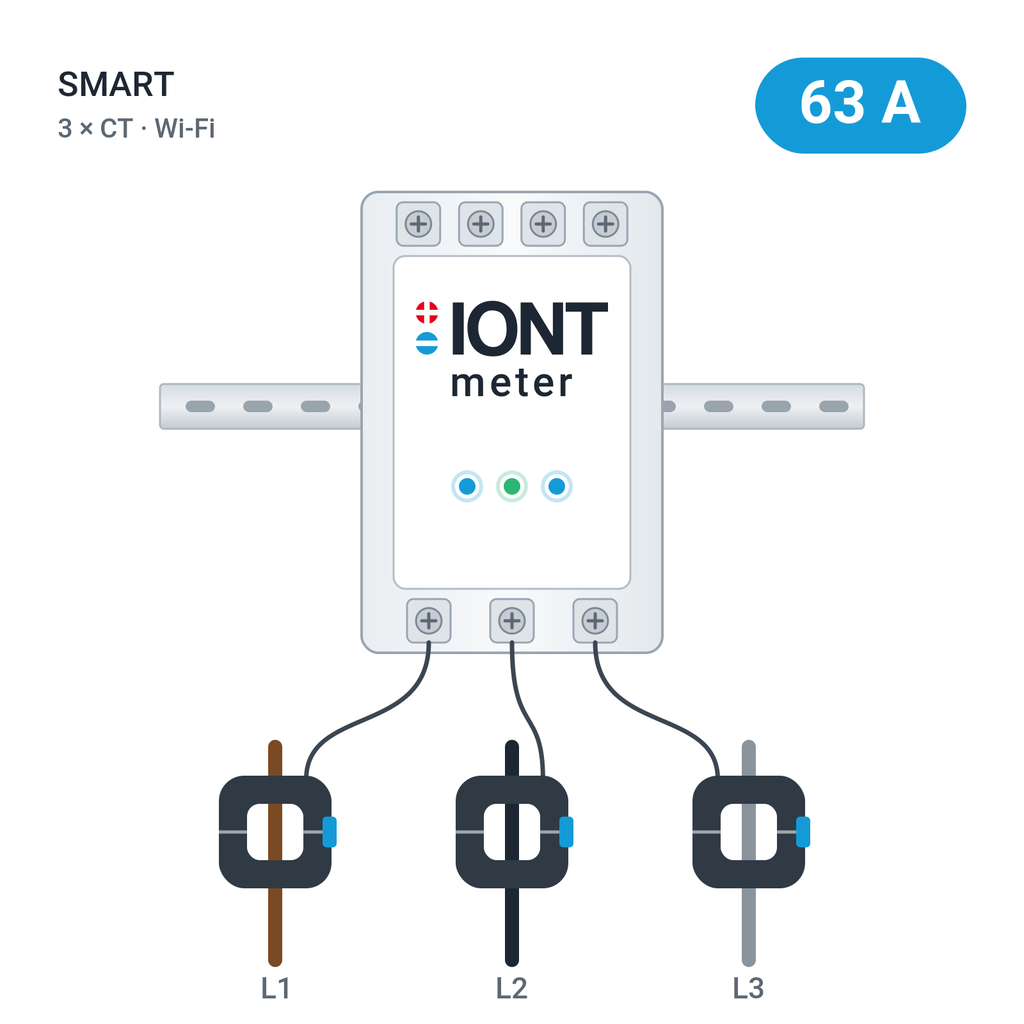
IONT meter for SMART charging stations – indirect metering up to 63 A
Meet the IONT Meter – a smart metering module for SMART series wallboxes. This compact three-phase meter is designed for accurate energy metering and optimised EV charging in homes and business installations.
🔹 Key features:
- Indirect metering up to 63 A – three-phase metering of the whole building’s consumption on the main supply.
- Metering of up to 3 phases or 3 separate single-phase circuits – ideal for monitoring the total consumption of the building
- Photovoltaics support – enables charging control from solar surplus.
- Wi-Fi connectivity – easy connection to the local network.
- Compact design with flat terminals – easy installation above or below the circuit breaker on the DIN rail, no extra space needed.
- Visual consumption indication – for a quick overview of current consumption.
Smart charging control including load balancing
Own meter, independent of the inverter. The station meters on the main supply, so it sees the house consumption and grid export by itself and selects the mode accordingly. It does not communicate with the PV inverter, so it works with a PV system of any brand, even after it is replaced. Via Modbus TCP the station can also be controlled from Home Assistant, Loxone or a building energy management system.
Load balancing means the EV charging station can operate in three different modes:
- Normal mode: The station adapts to the amount of electricity the building currently needs. When the building’s consumption rises, the station lowers its power and charging speed; when consumption drops, the station raises its power and charging speed.
- Eco mode: The station makes the most of energy from renewable sources such as solar panels. When enough solar energy is available, the station adjusts its charging power to the surplus that would otherwise be exported to the grid.
- Boost mode: The station charges the EV as fast as possible, regardless of current electricity demand. Use this mode when you need to charge quickly.
This allows efficient and flexible use of electricity based on current needs and available energy sources.